Esri.com
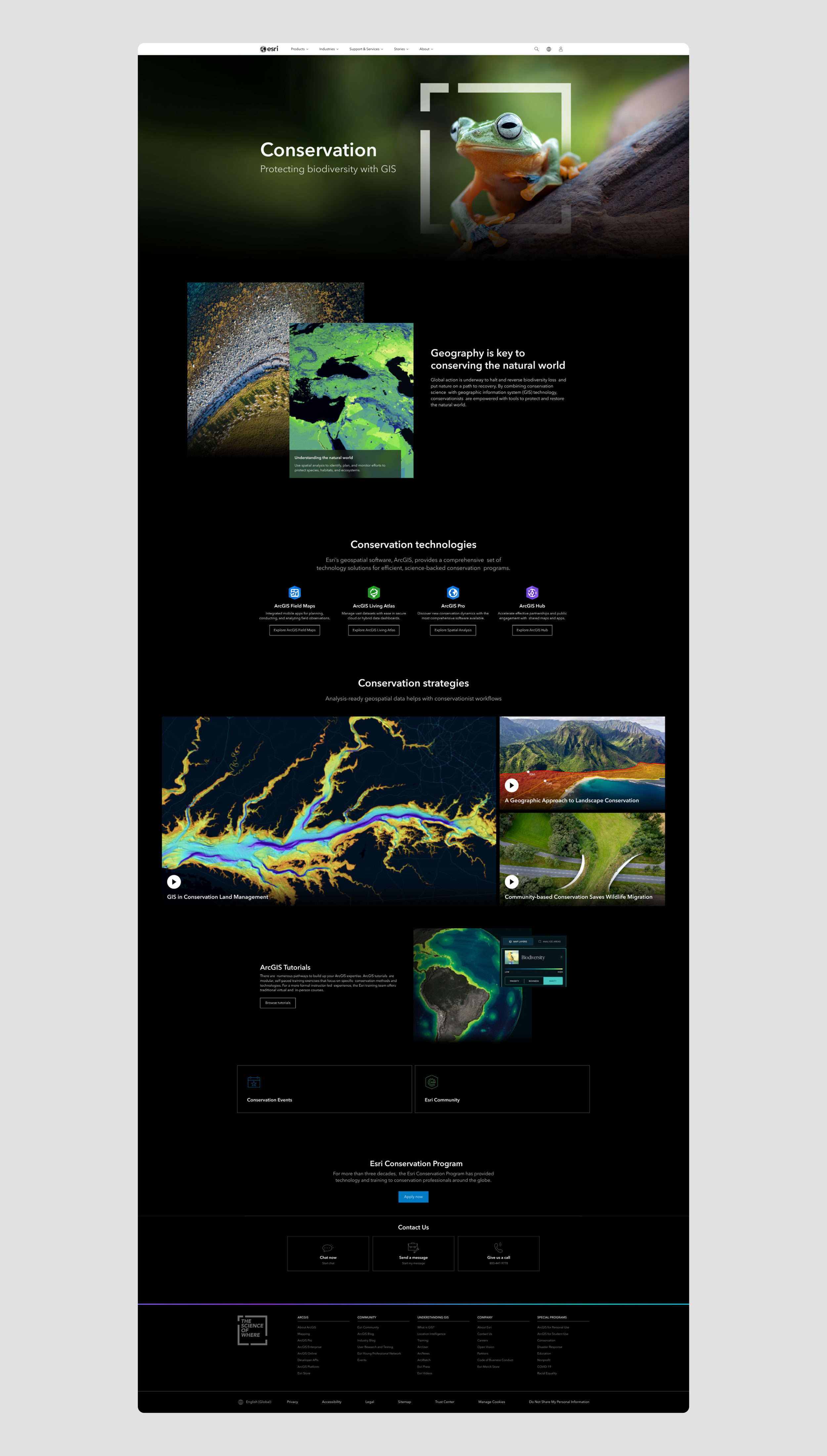
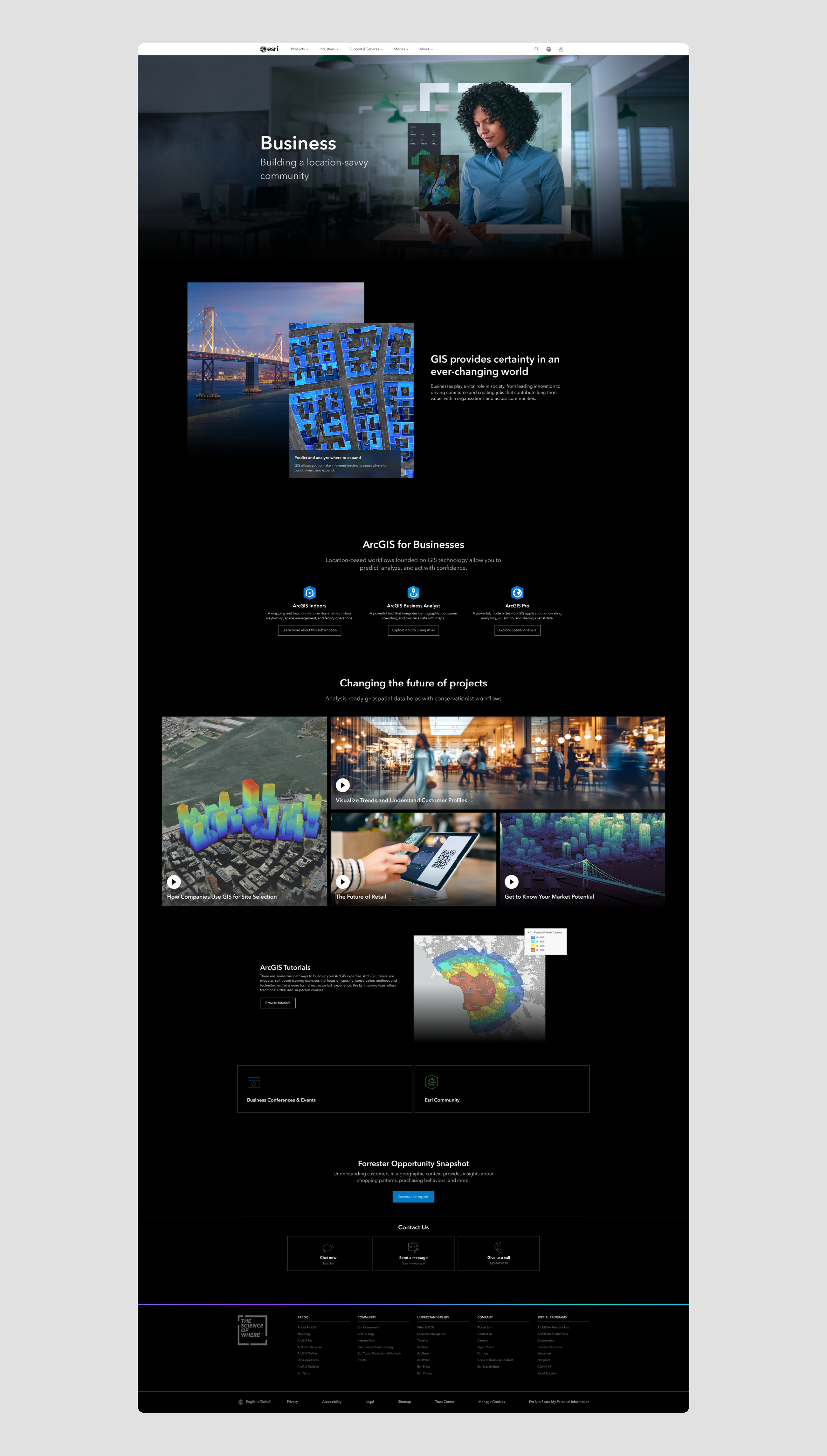
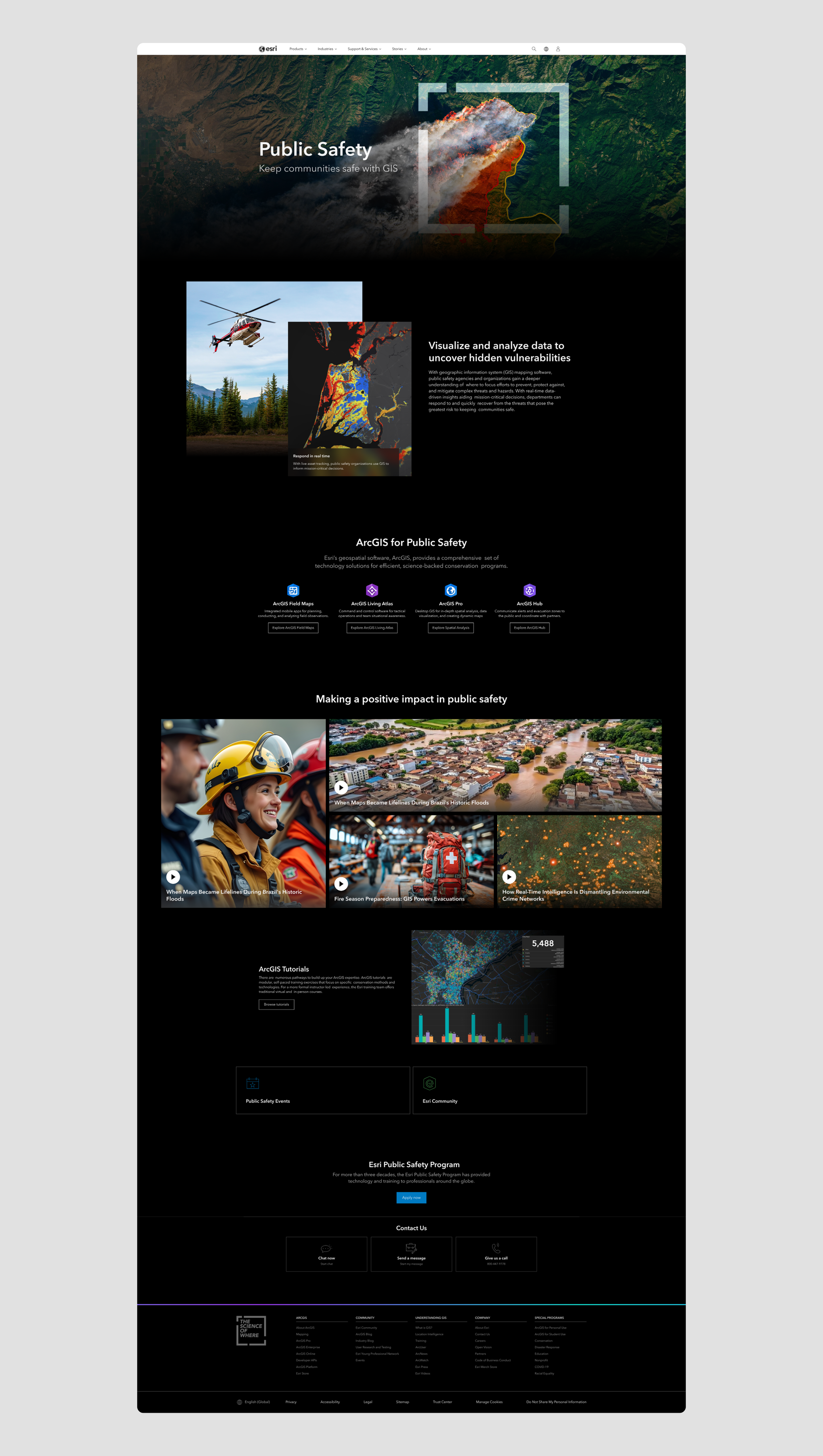
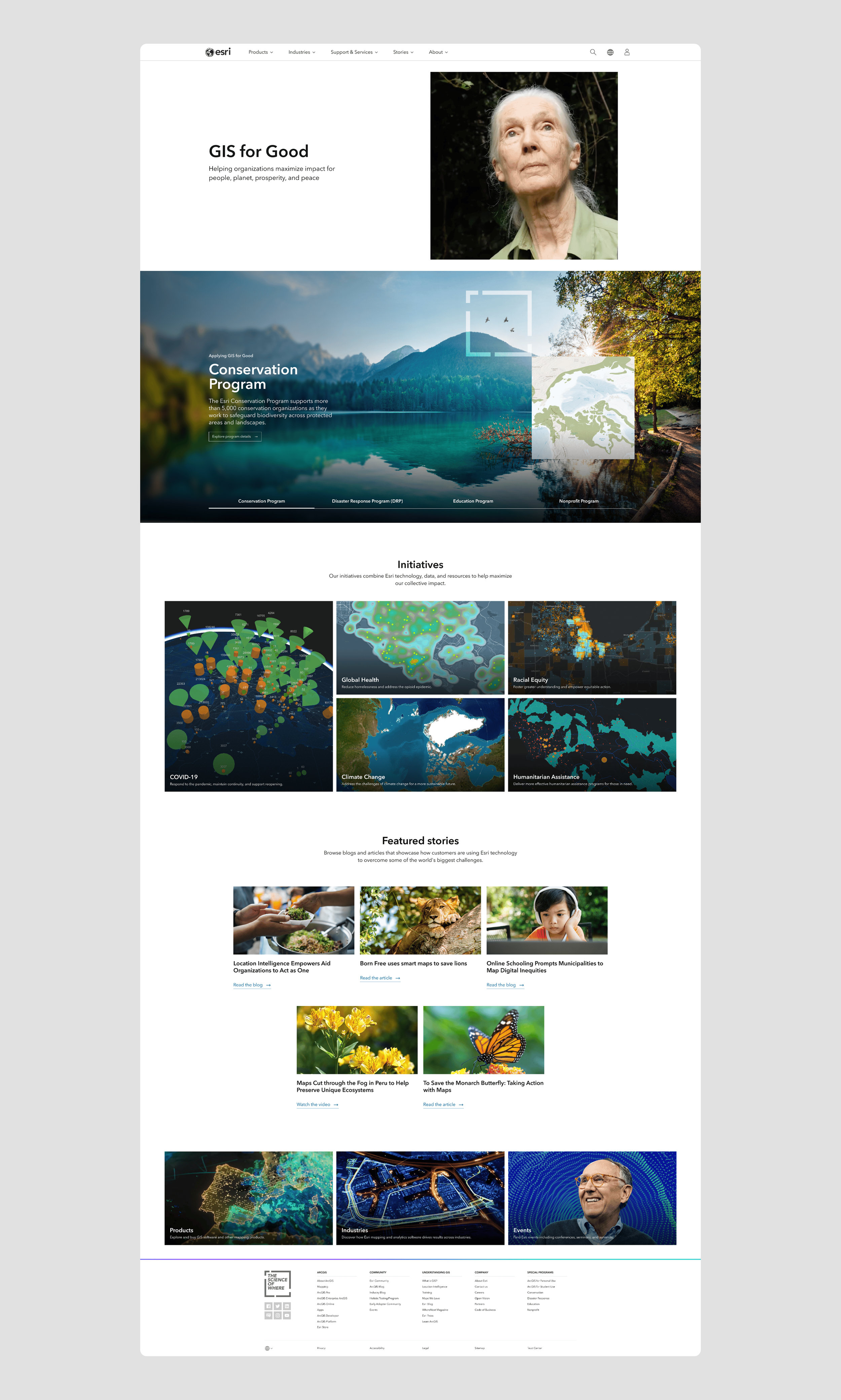
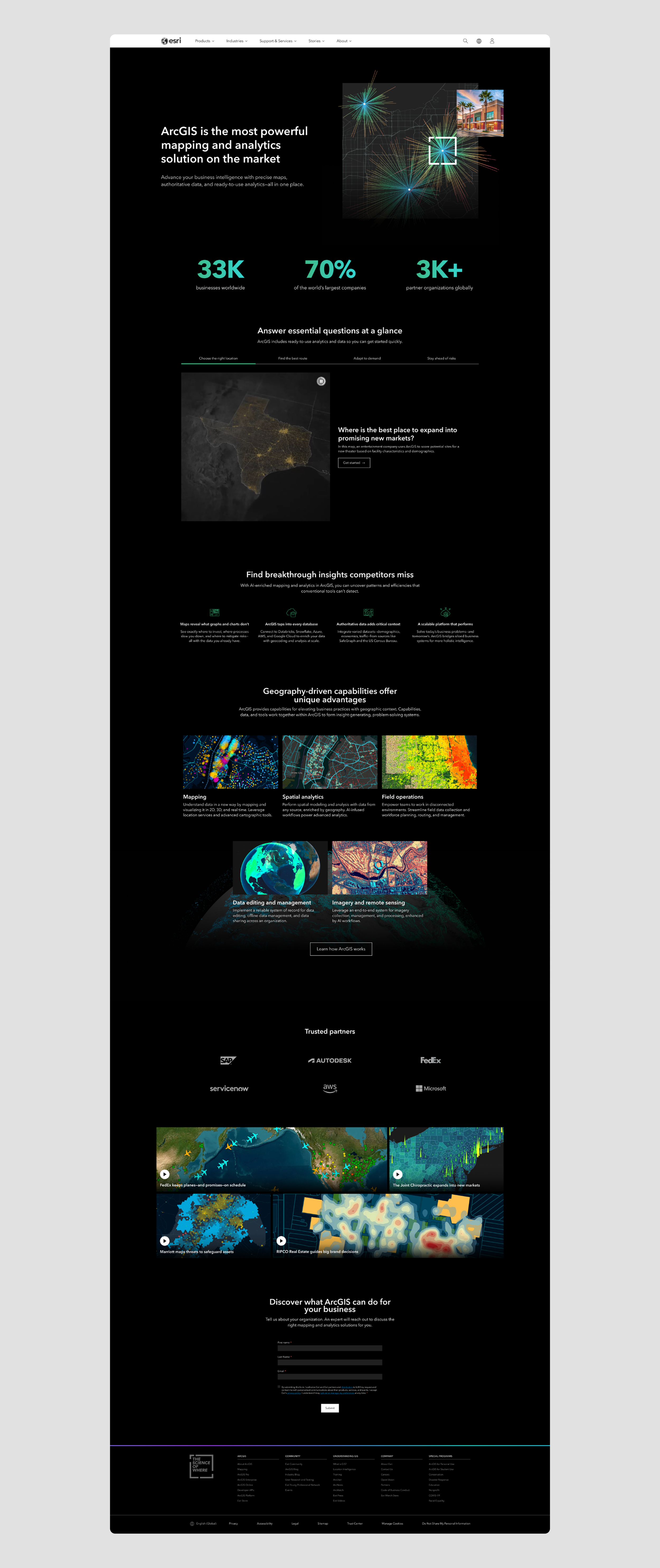
Esri.com gets over 2 million visitors a year—everyone from curious newcomers to seasoned GIS professionals. The site had thousands of pages, but no unified visual style to tie them together. The design had splintered into inconsistent looks that made it harder for people to understand what Esri actually does and why it matters.
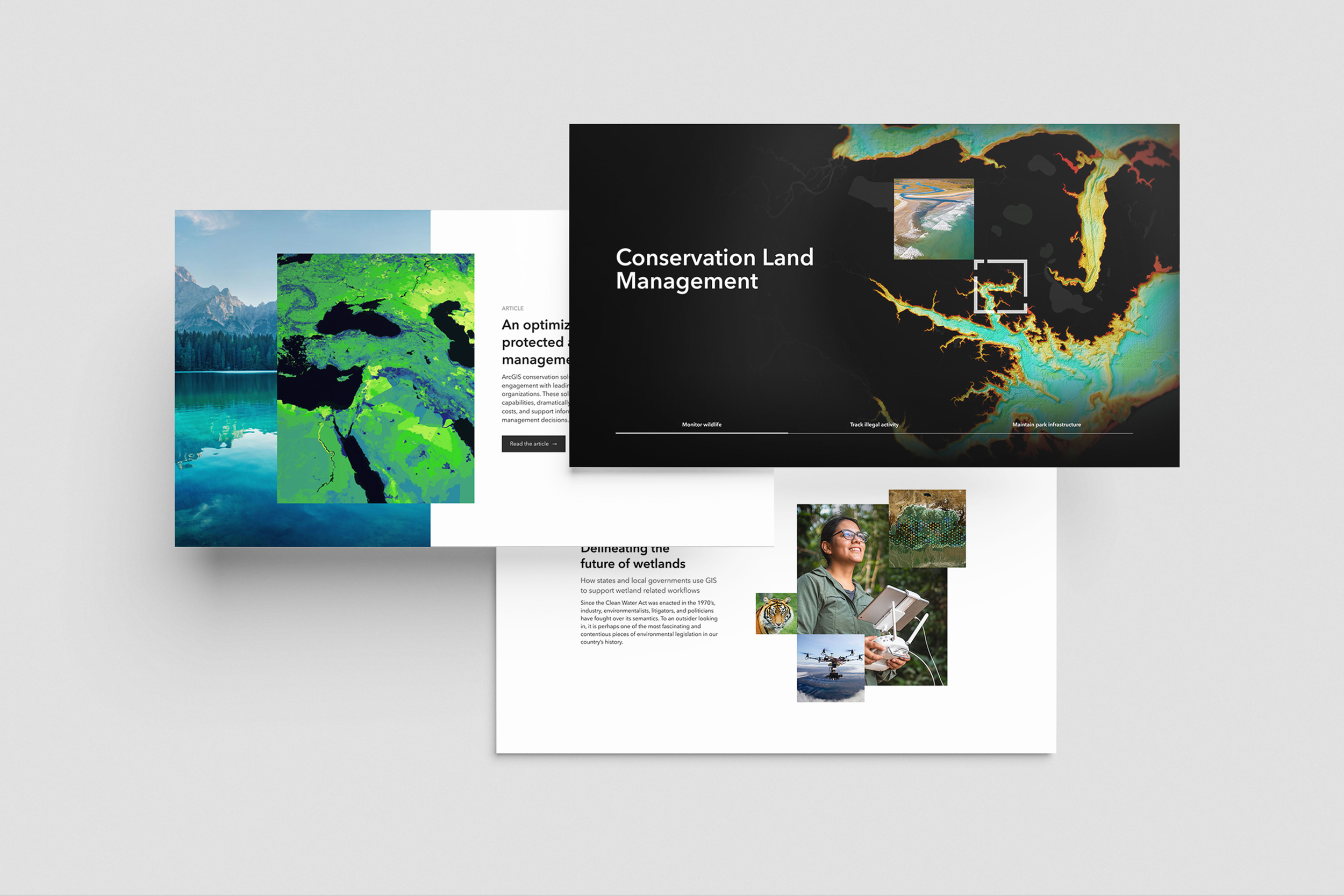
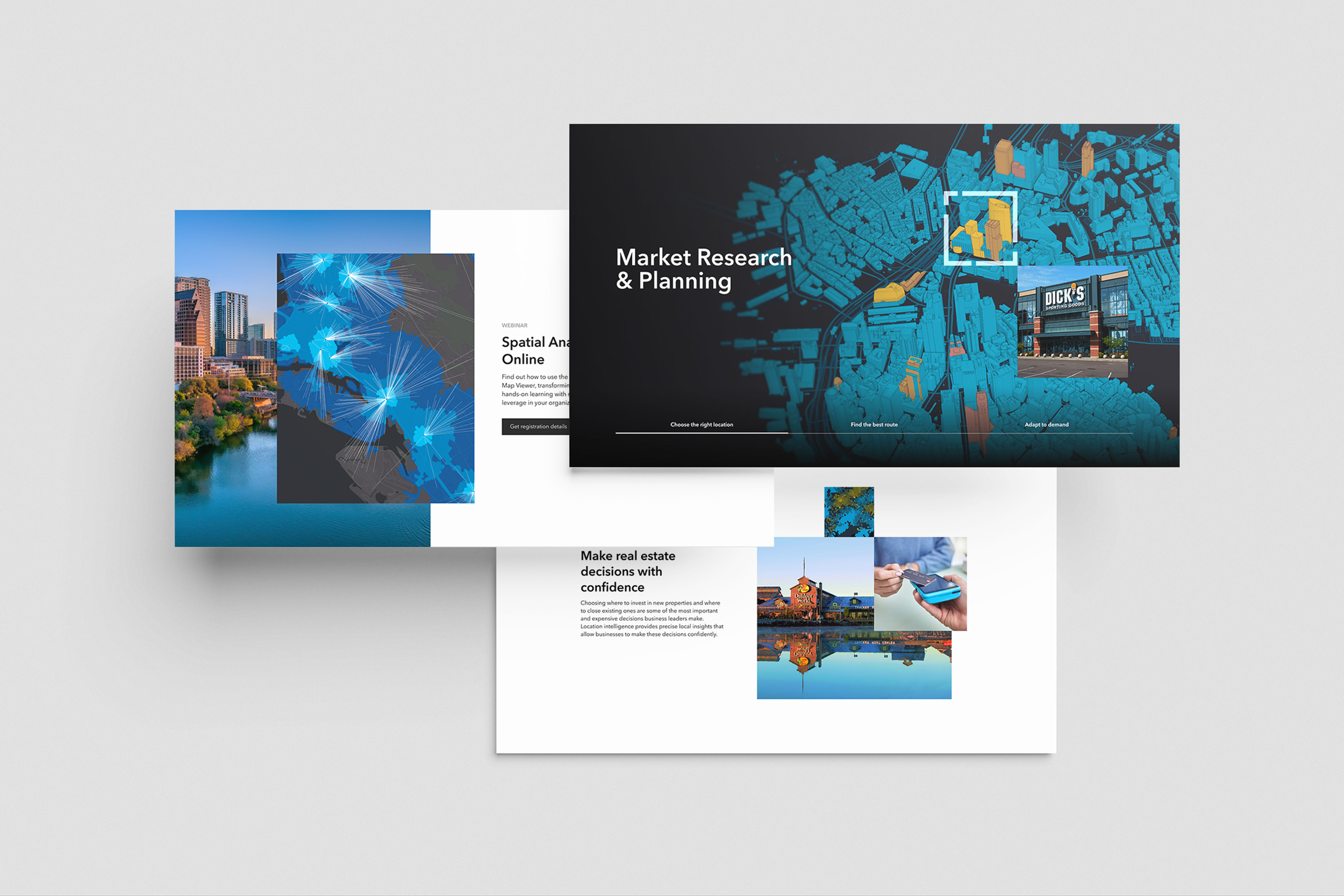
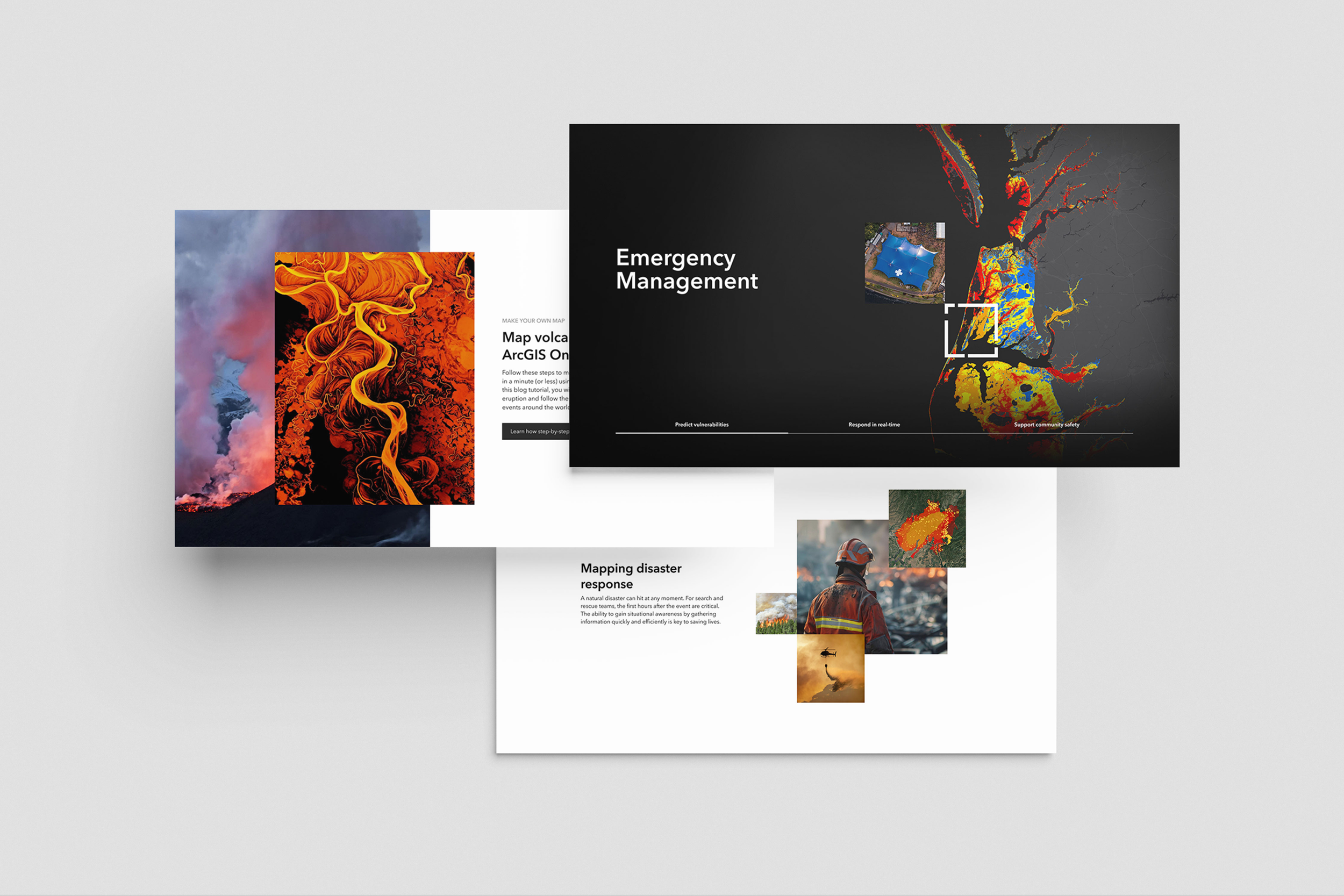
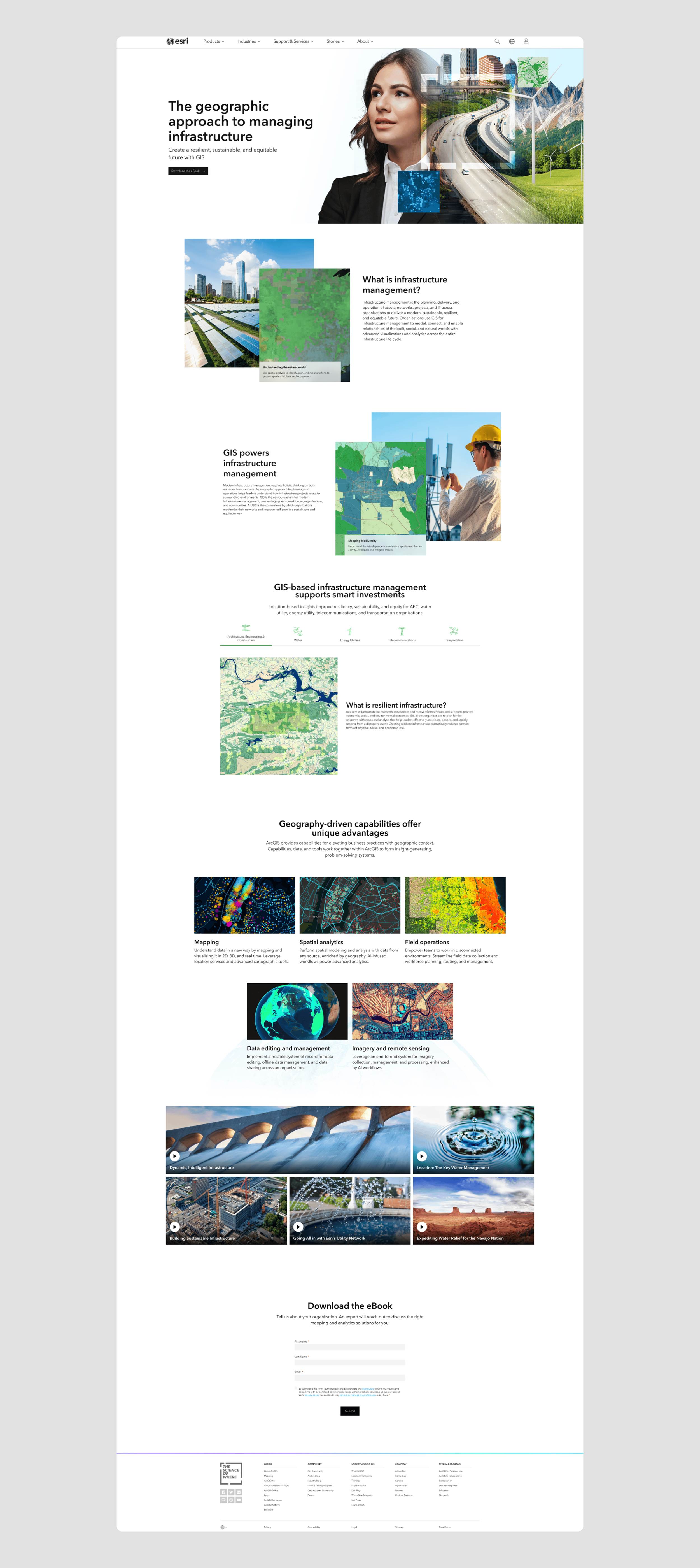
The biggest design challenge was scale. The solution needed to work everywhere: brand campaigns, product pages, technical documentation, industry services. It had to have clear, captivating visuals for newcomers and detailed technical imagery for experts.
We also had an organizational challenge. Different teams had been running their own sections independently, and getting everyone aligned meant building trust across the org. It was really important to listen to what mattered to them and make sure their expertise informed the new approach.
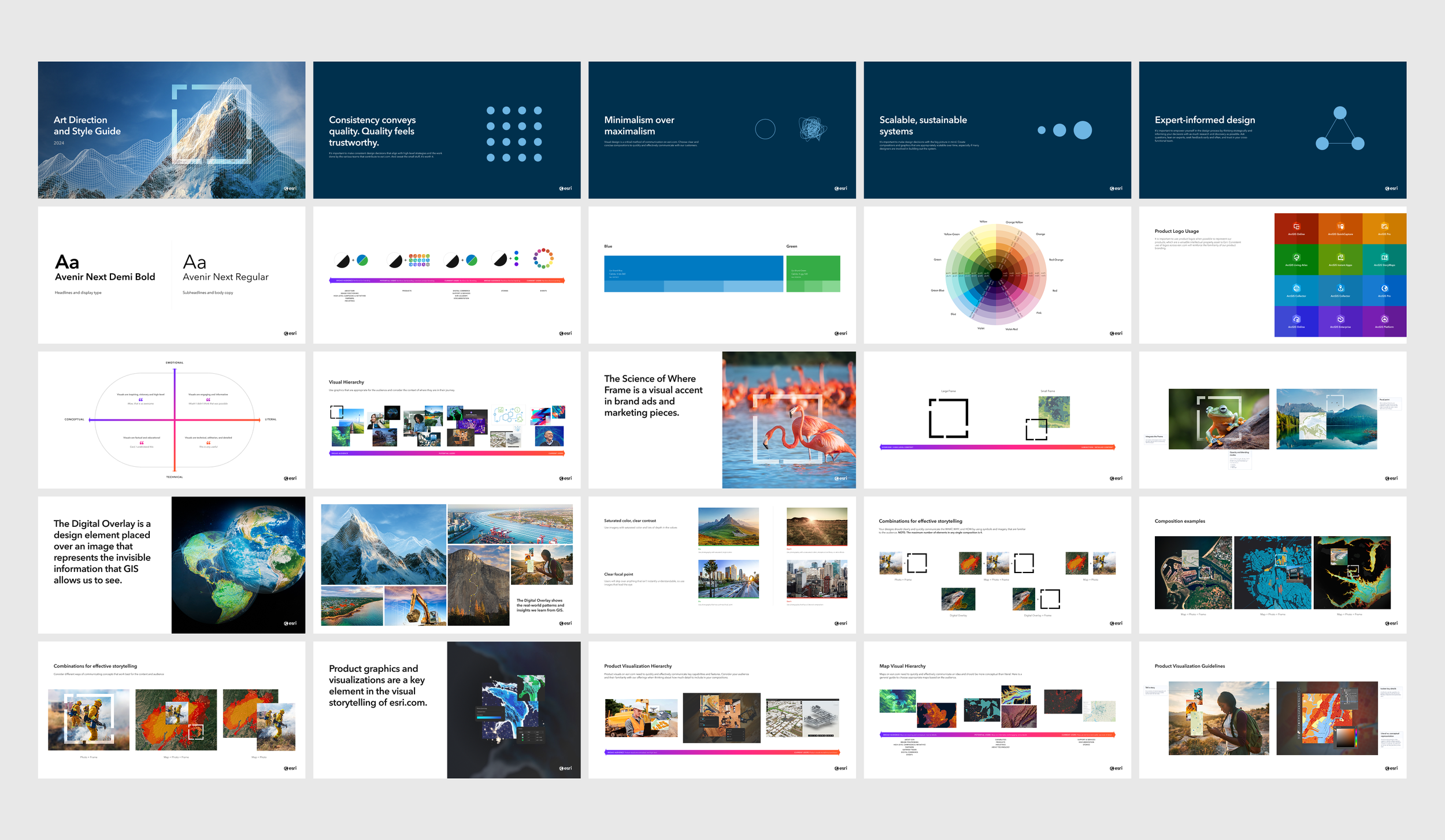
Getting a 50-year-old company to think differently certainly wasn’t a cake walk, but it was rewarding to create a central idea that everyone could get behind. I led this project from research through launch, audited the entire site and presented findings that helped convince executive leadership a unified approach was worth the investment. I created the visual strategy, concept art, and style guide that now serves as a design framework for the web department. I worked closely with Carl Bender, Paul Briseno, and Alex Smailes, having lots of philosophical discussions about how to navigate this project and working together on visuals.
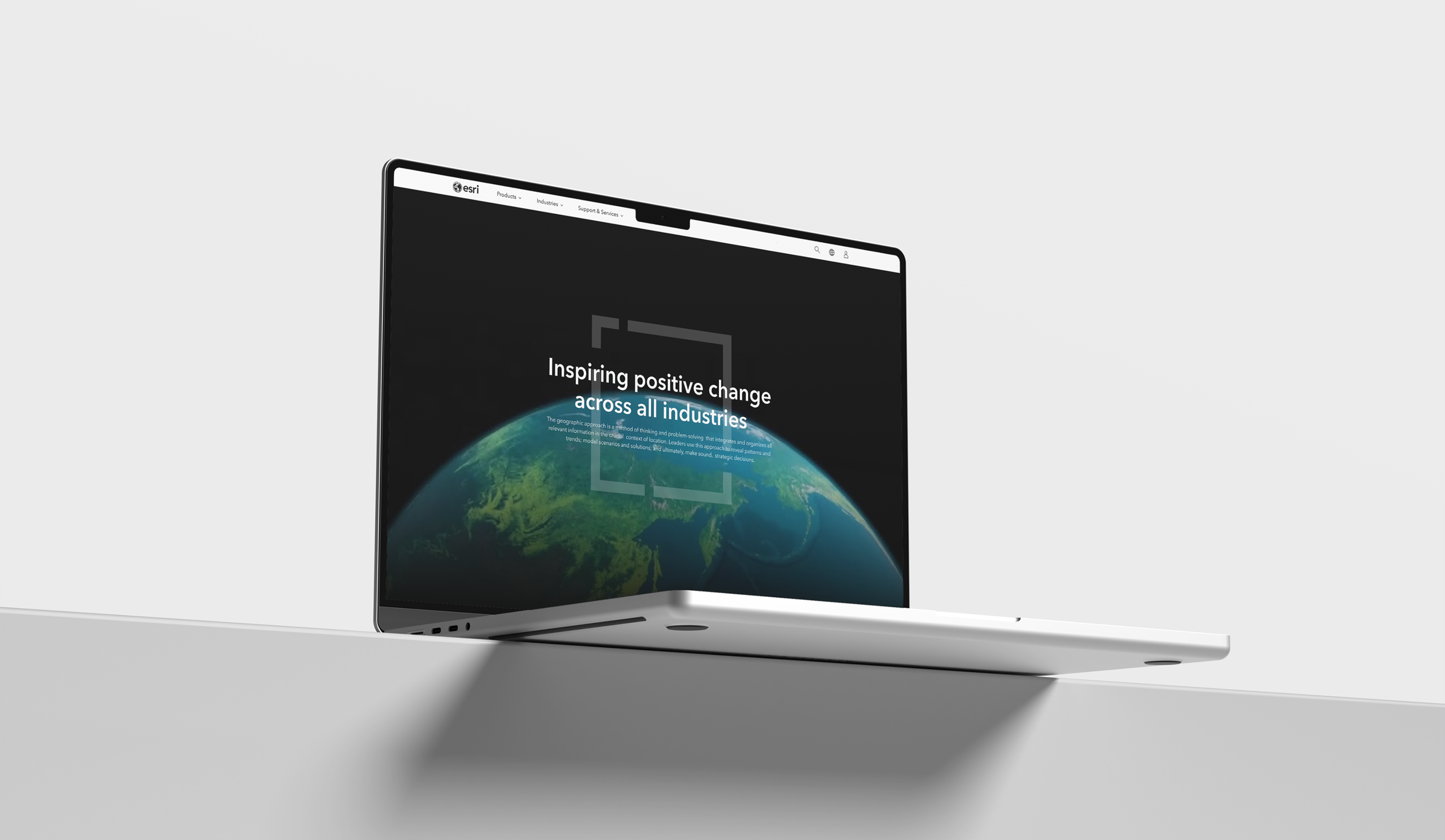
The result is a visual language that finally matches the sophistication of the technology. One that uses maps as the storytelling hero. It's a system built to grow with Esri as more change inevitably shapes how humans interact with their tech. It’s flexible enough to serve every audience while helping people find what they need and making complex concepts less intimidating.
Client
Esri
Disciplines
Art Direction
Design Systems
UX UI
Stakeholder Interview
“The number one problem Esri's been trying to solve is how do we get people to understand what we do? People should visit Esri.com and think maps are works of art that give them amazing information. If we can change that, just that fundamental level, that would be a success.”