What is GIS?
What is GIS?
Introducing complex technology to new audiences
Introducing complex technology to new audiences
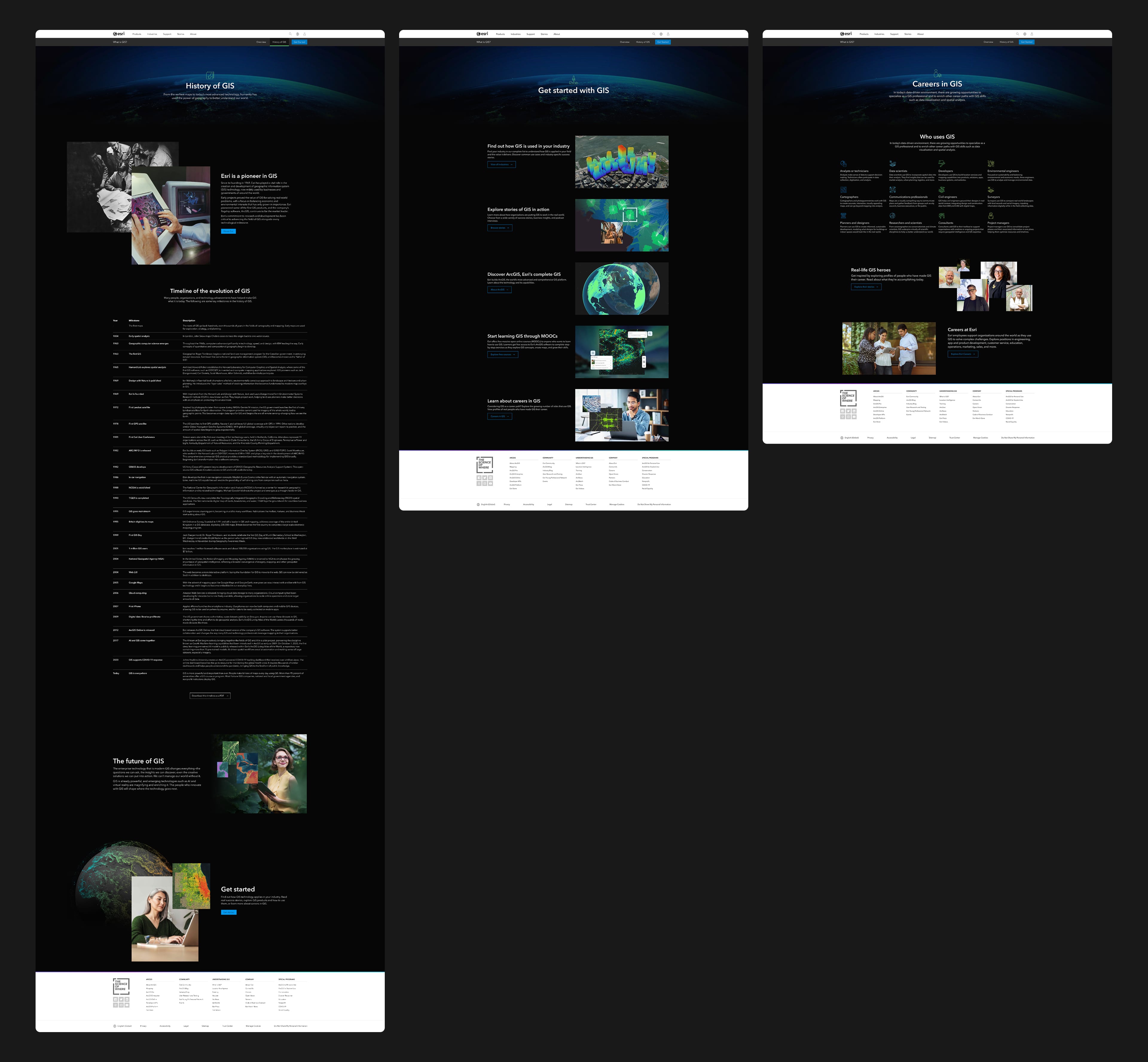
Ask anyone in the GIS community how they explain GIS to friends and family, and you’ll probably get a shrug and a laugh. Esri makes some of the world’s most powerful GIS software, but even they had a hard time translating its value. Their “What is GIS?” page already ranked #1 in search and drew more than 300,000 visitors a year, yet research showed it wasn’t answering the question people came there to ask. The bigger opportunity was to help define how GIS is understood beyond the industry. Drawing on my background in education, I led the project over 18 months, aligning experts, creatives, and executives on strategy, and translating it into a redesigned web experience and brand campaign to introduce GIS to new audiences.
Ask anyone in the GIS community how they explain GIS to friends and family, and you’ll probably get a shrug and a laugh. Esri makes some of the world’s most powerful GIS software, but even they had a hard time translating its value. Their “What is GIS?” page already ranked #1 in search and drew more than 300,000 visitors a year, yet research showed it wasn’t answering the question people came there to ask. The bigger opportunity was to help define how GIS is understood beyond the industry. Drawing on my background in education, I led the project over 18 months, aligning experts, creatives, and executives on strategy, and translating it into a redesigned web experience and brand campaign to introduce GIS to new audiences.

Strategy
Strategy
Opportunity
A redesign of WhatIsGIS.com could give the brand a shared way to introduce the technology and help more people see its potential.
Insight
While the old site was dense and overwhelming, people don't need less information. They needed the right information, presented at a pace newcomers can absorb.
Strategy
Forget traditional web design assumptions and lean on education theory instead. Build the GIS narrative around how people learn, starting with foundational ideas and introducing complexity progressively.
Opportunity
A redesign of WhatIsGIS.com could give the brand a shared way to introduce the technology and help more people see its potential.
Insight
While the old site was dense and overwhelming, people don't need less information. They needed the right information, presented at a pace newcomers can absorb.
Strategy
Forget traditional web design assumptions and lean on education theory instead. Build the GIS narrative around how people learn, starting with foundational ideas and introducing complexity progressively.

"I believe the outcome is the best web site we have ever produced. With this, we’re helping people to truly start to understand what GIS is all about. Plus, we are providing an exceptional first impression of Esri to anyone who visits the pages."
"I believe the outcome is the best web site we have ever produced. With this, we’re helping people to truly start to understand what GIS is all about. Plus, we are providing an exceptional first impression of Esri to anyone who visits the pages."
Animations
Animations
Semiotics Mapping
I developed a semiotic framework that uses the most universal symbols to communicate abstract ideas, helping users latch onto meaning quickly. That framework gave the creative team and stakeholders a common definition of what “clear and compelling” actually meant.
Storyboarding
For every animation featured on the site, I translated the semiotics maps into storyboards, collaborating with internal and external motion graphics vendors to bring the ideas to life.
Semiotics Mapping
I developed a semiotic framework that uses the most universal symbols to communicate abstract ideas, helping users latch onto meaning quickly. That framework gave the creative team and stakeholders a common definition of what “clear and compelling” actually meant.
Storyboarding
For every animation featured on the site, I translated the semiotics maps into storyboards, collaborating with internal and external motion graphics vendors to bring the ideas to life.

Campaign
Campaign
The same narrative extended into paid social and digital media, using clear, visually immediate stories to introduce GIS to a broader audience and drive curiosity toward the deeper web experience.
The same narrative extended into paid social and digital media, using clear, visually immediate stories to introduce GIS to a broader audience and drive curiosity toward the deeper web experience.

The Team
The Team
I worked closely with copywriter Andrea Massey, motion designer Dan Gill, Group Art Director Carl Bender, and Chief Creative Officer James Hitchcock. The full team included video production, UX researchers, front-end developers, content strategists, project managers, GIS SMEs, and the marketing department.
I worked closely with copywriter Andrea Massey, motion designer Dan Gill, Group Art Director Carl Bender, and Chief Creative Officer James Hitchcock. The full team included video production, UX researchers, front-end developers, content strategists, project managers, GIS SMEs, and the marketing department.
Awards
Awards
Digiday Content Marketing Award, Gold Addy (AAF 2025)
Digiday Content Marketing Award, Gold Addy (AAF 2025)